
Polish Lightly Salted Cucumbers (Ogórki Małosolne)
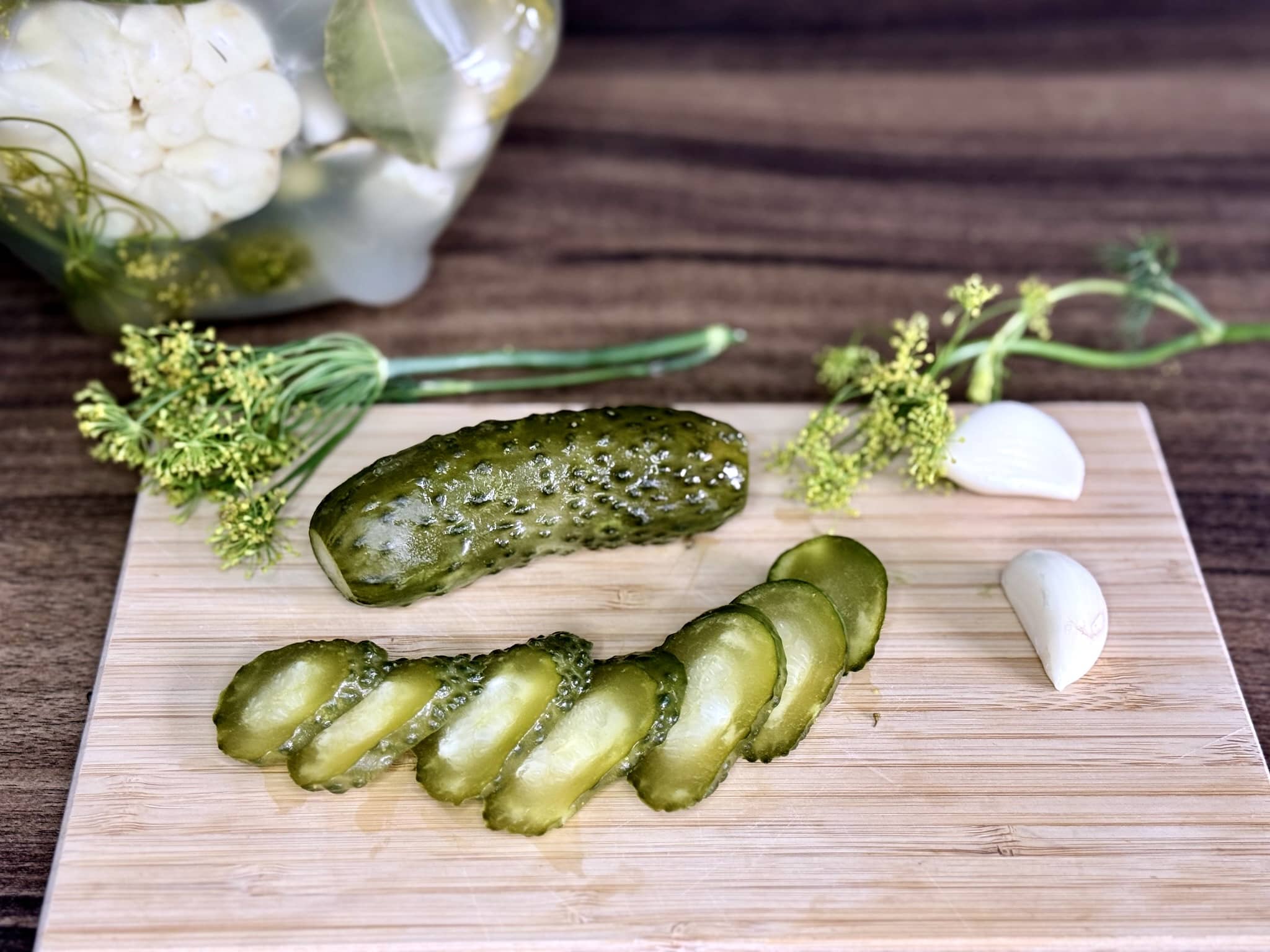
Discover the authentic recipe for Polish lightly salted cucumbers (ogórki małosolne). Learn the perfect brine ratio, salt tips, and step-by-step method for crunchy, naturally fermented, probiotic half-sour pickles at home. Quick, easy, and delicious!
preparation: 30 minutes
making: 10 minutes
total: 3 day(s) 0 hour(s) 40 minutes
servings: 16 cucumbers
nutrition: 238 calories per serving
cuisine: Polish
Ingredients
- 1 kg fresh, small firm pickling cucumbers
- 1.5 liters of water
- 1.5 tbs of non-iodized salt
Pickling Spice Bundle
- a few sprigs of dill spears/umbels
- a piece of horseradish root, sliced into strips
- a head of garlic
- a few bay leaves
There is no strict right or wrong quantity for the pickling spices in this recipe. Feel free to adjust the aromatics to your taste – using more garlic and horseradish will yield a sharper, more pungent crunch, whilst keeping them light gives a gentler, more delicate dill flavour.
Method
Wash the cucumbers and leave them in a bowl of cold water for half an hour.
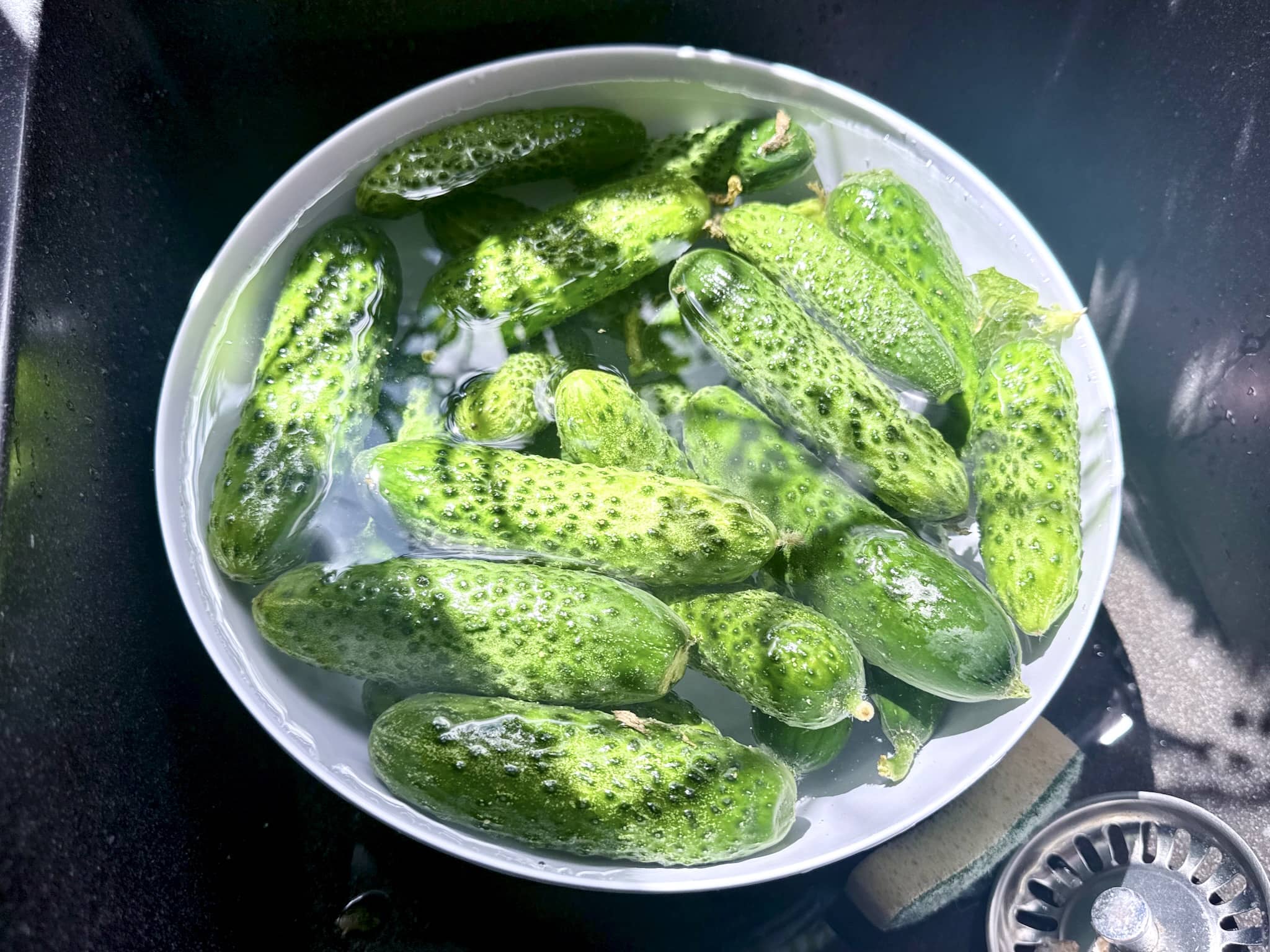
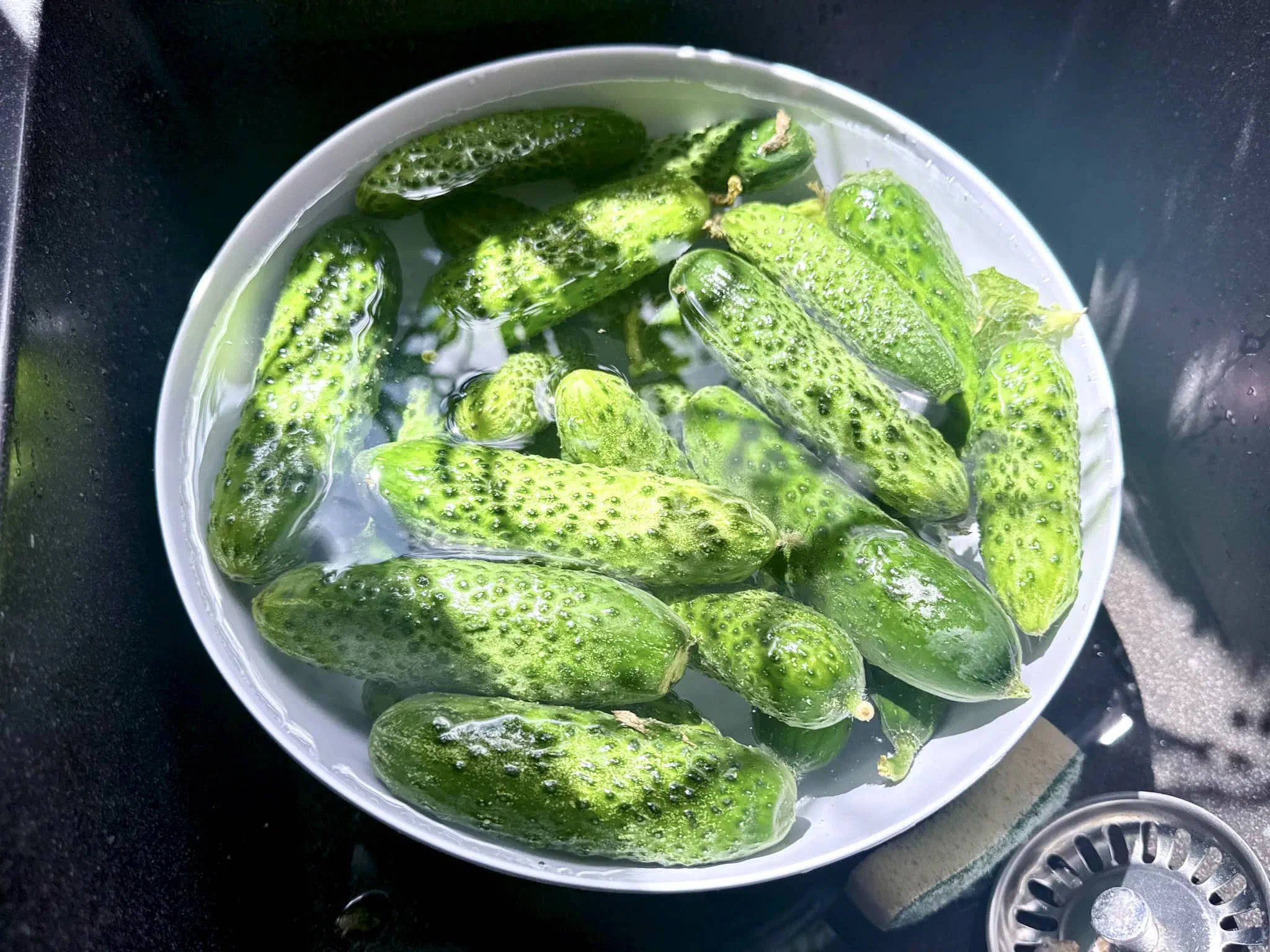
Boil 1.5 litres of water and dissolve the salt in it. Leave it to cool down – for half-sour pickles, it is best to use lukewarm water (this speeds up the process), but never boiling water, as the cucumbers will lose their crunch.
Cut a piece of horseradish and chop it into sticks.
Halve the head of garlic.
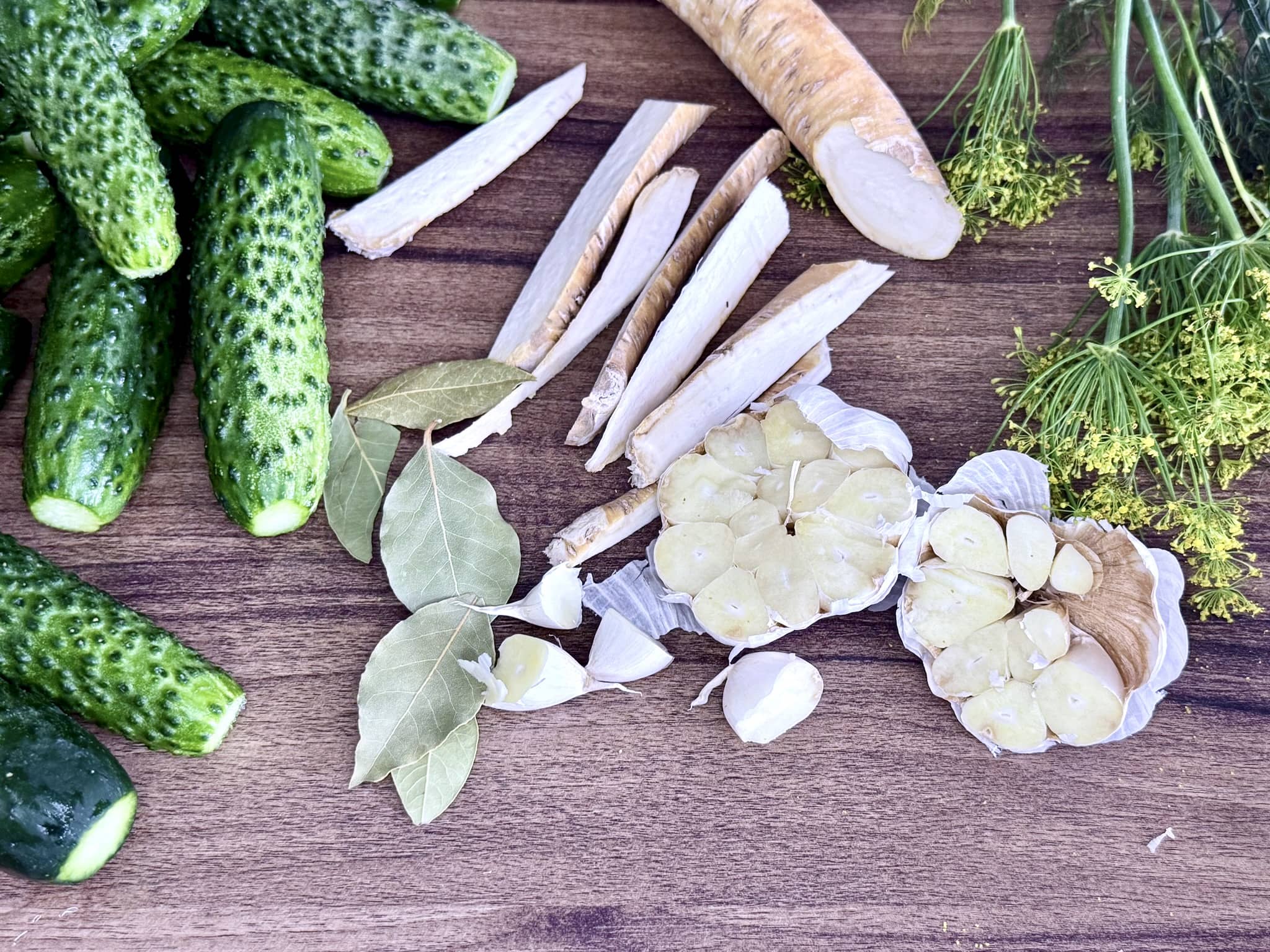
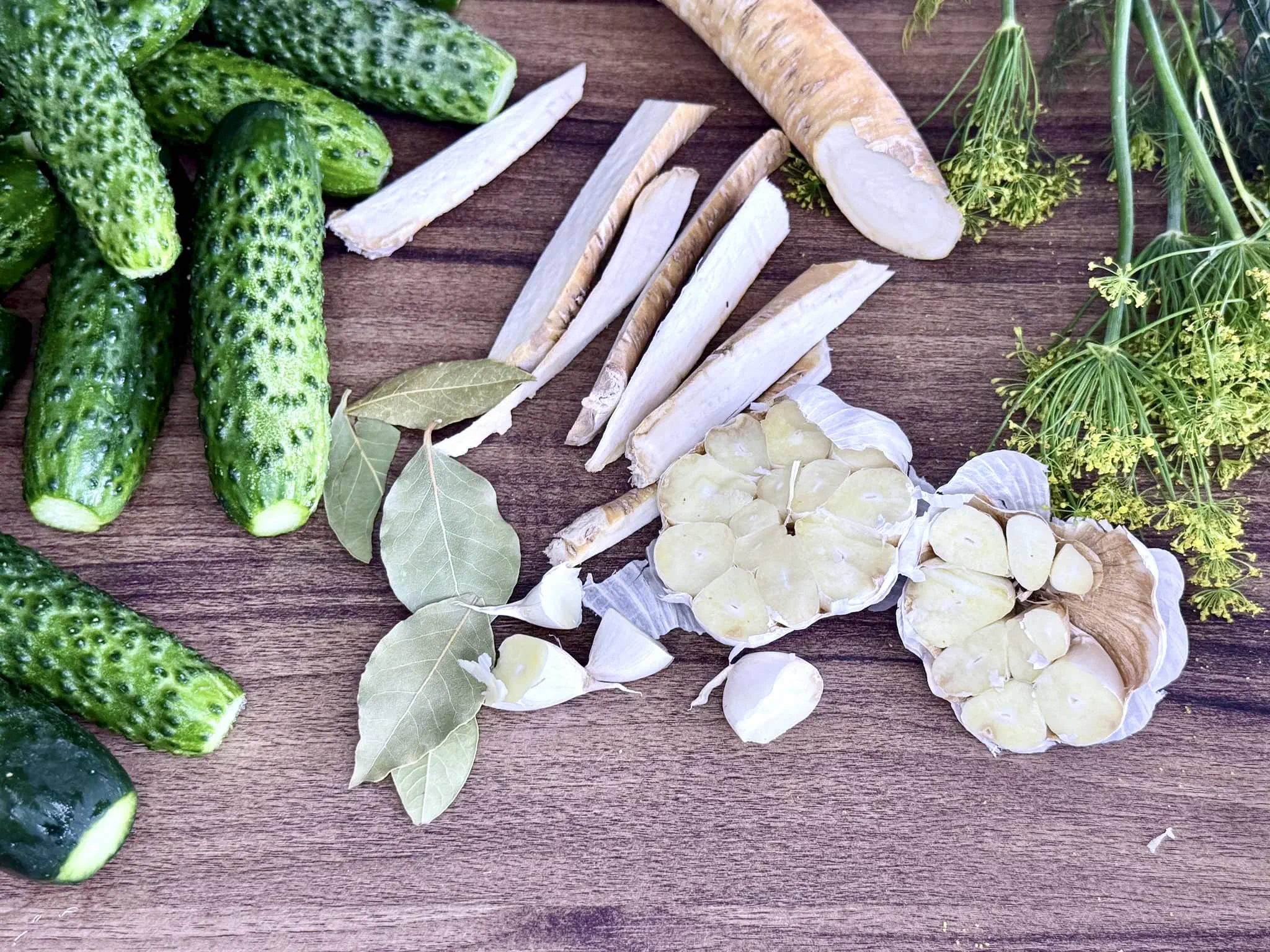
Place half of the dill, horseradish, and garlic at the bottom of a large jar or stoneware crock.
Trim the ends of the cucumbers and pack them tightly in a vertical position. Wedge the remaining herbs and spices on top and into any gaps.
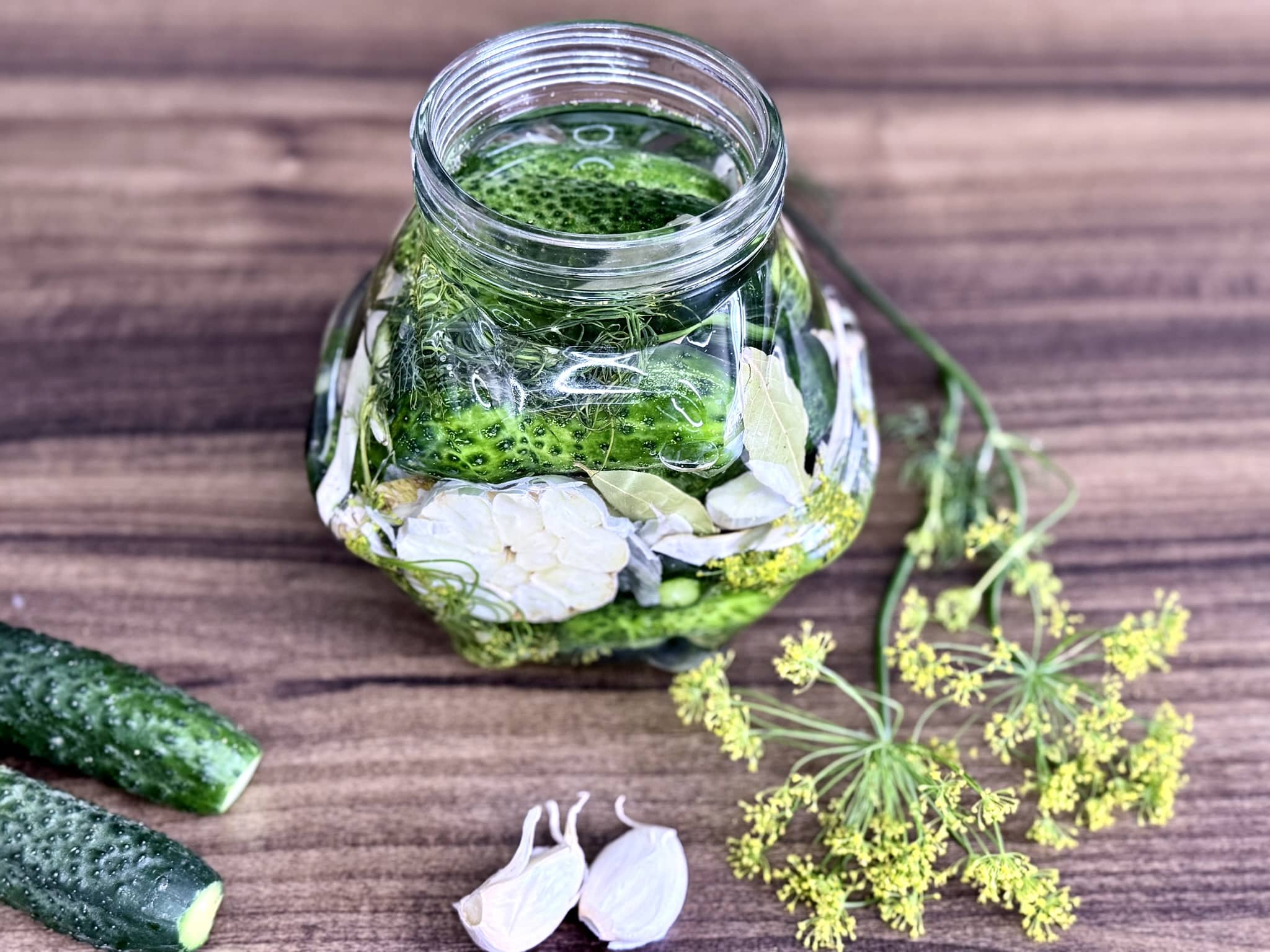
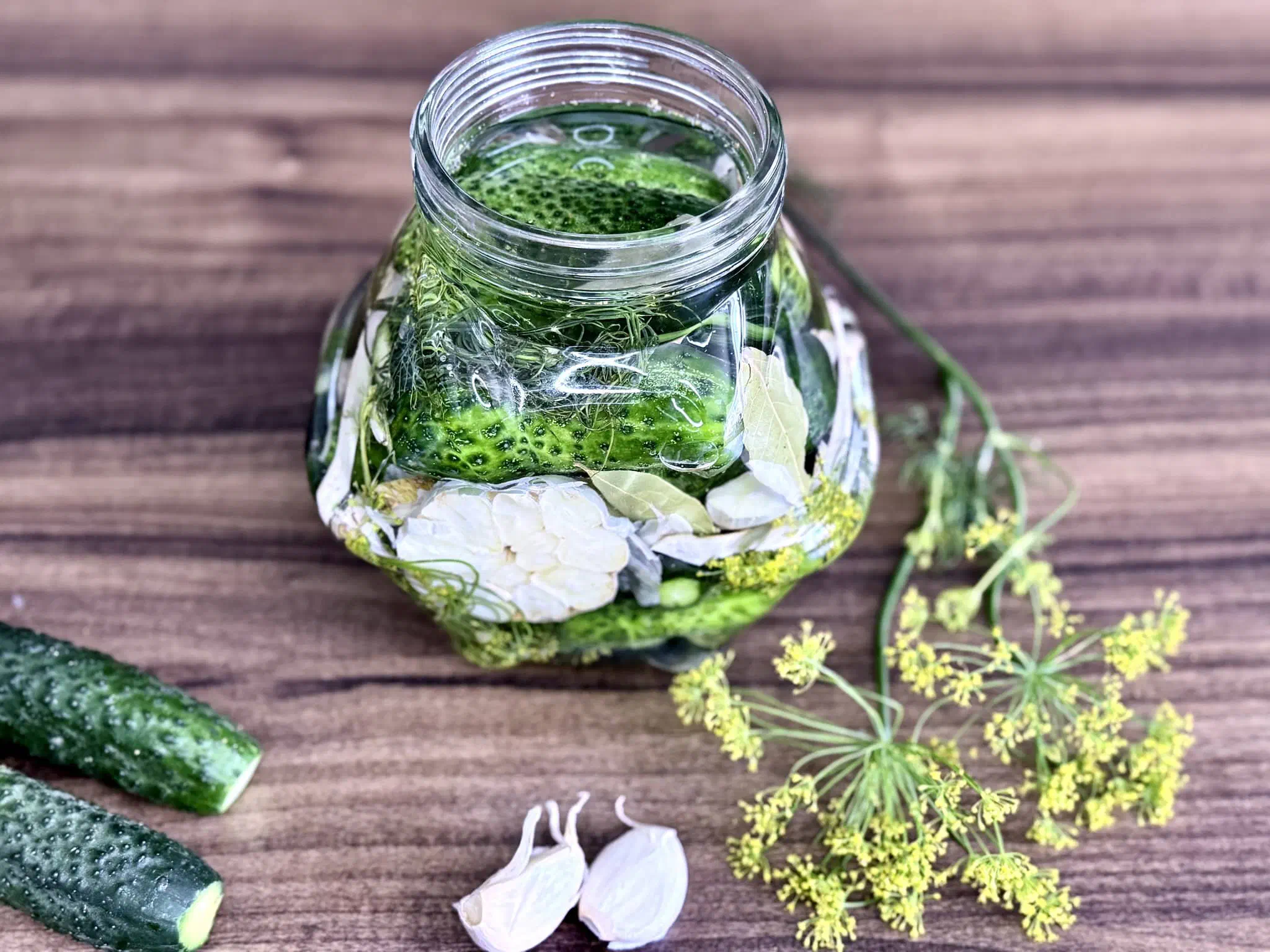
Pour the prepared salted water over everything so that all the cucumbers are completely submerged. If they float to the top, you can weigh them down with a small plate or fermentation weights.
Cover the jar loosely (do not seal the jar completely, as gases need to escape) and set it aside in a shaded spot at room temperature.
Day One
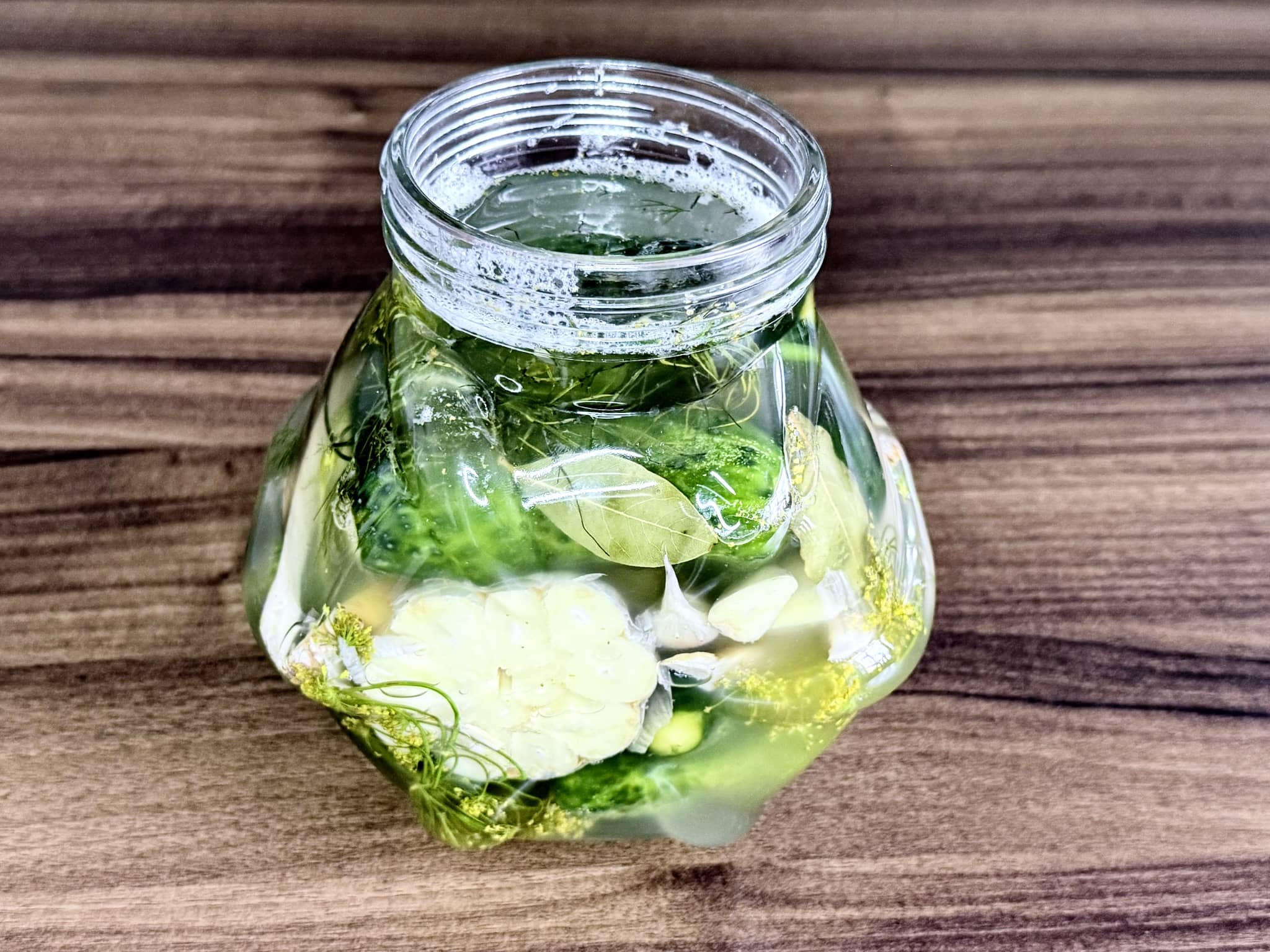
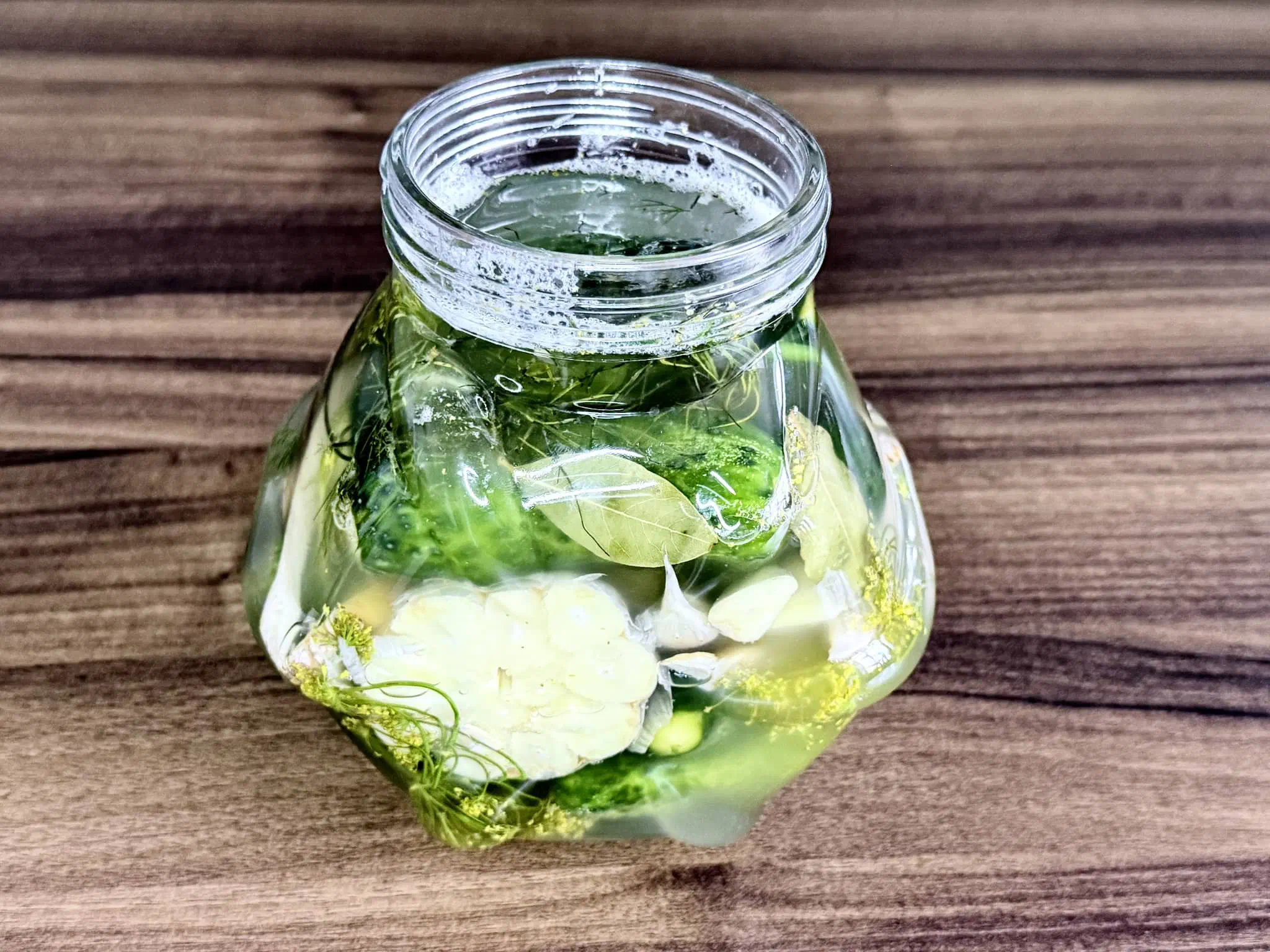
After the first 24 hours, you will notice that the fermentation process has started. Do not do anything with your cucumbers and leave them for the next day.
Day Two
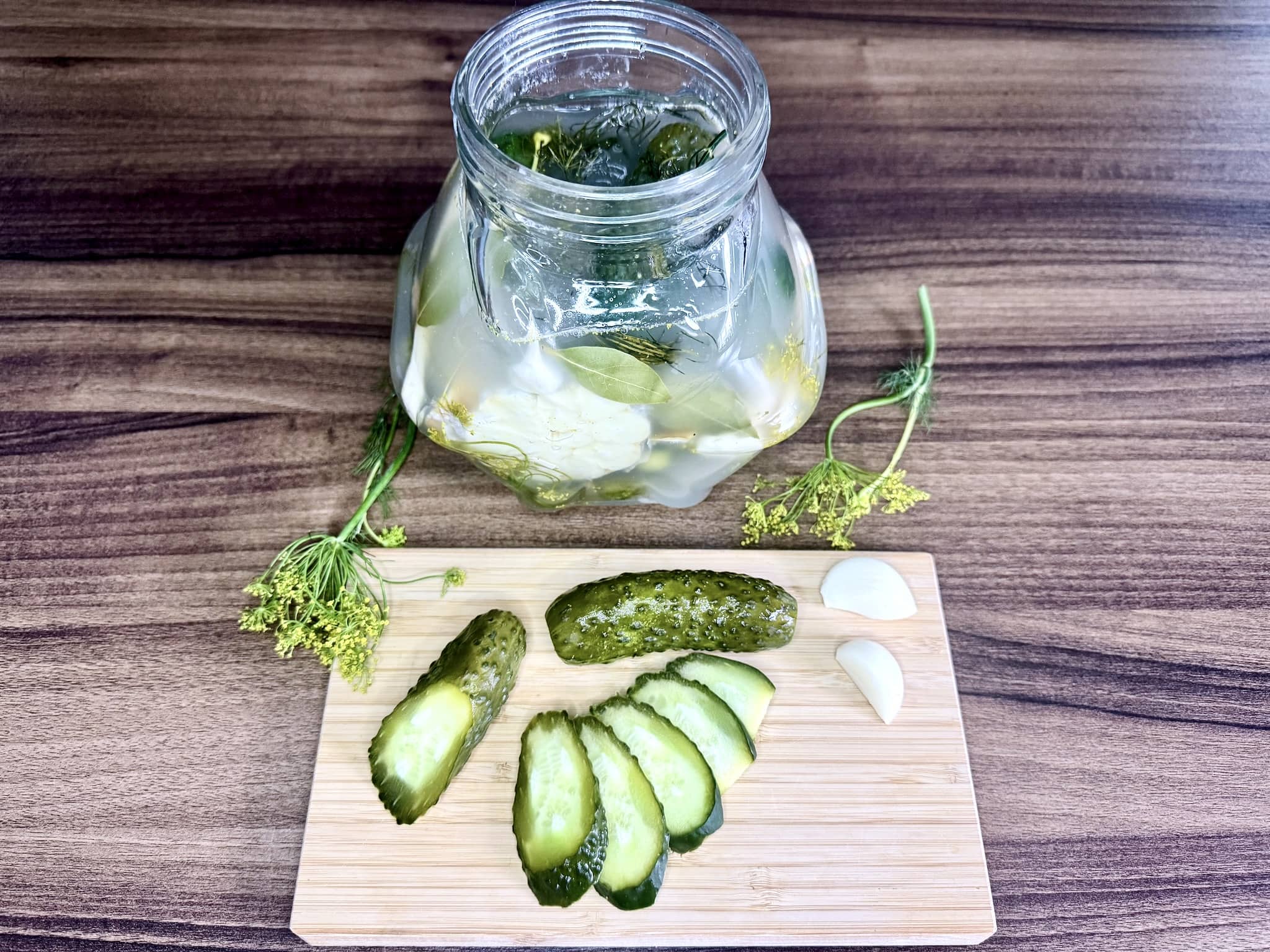
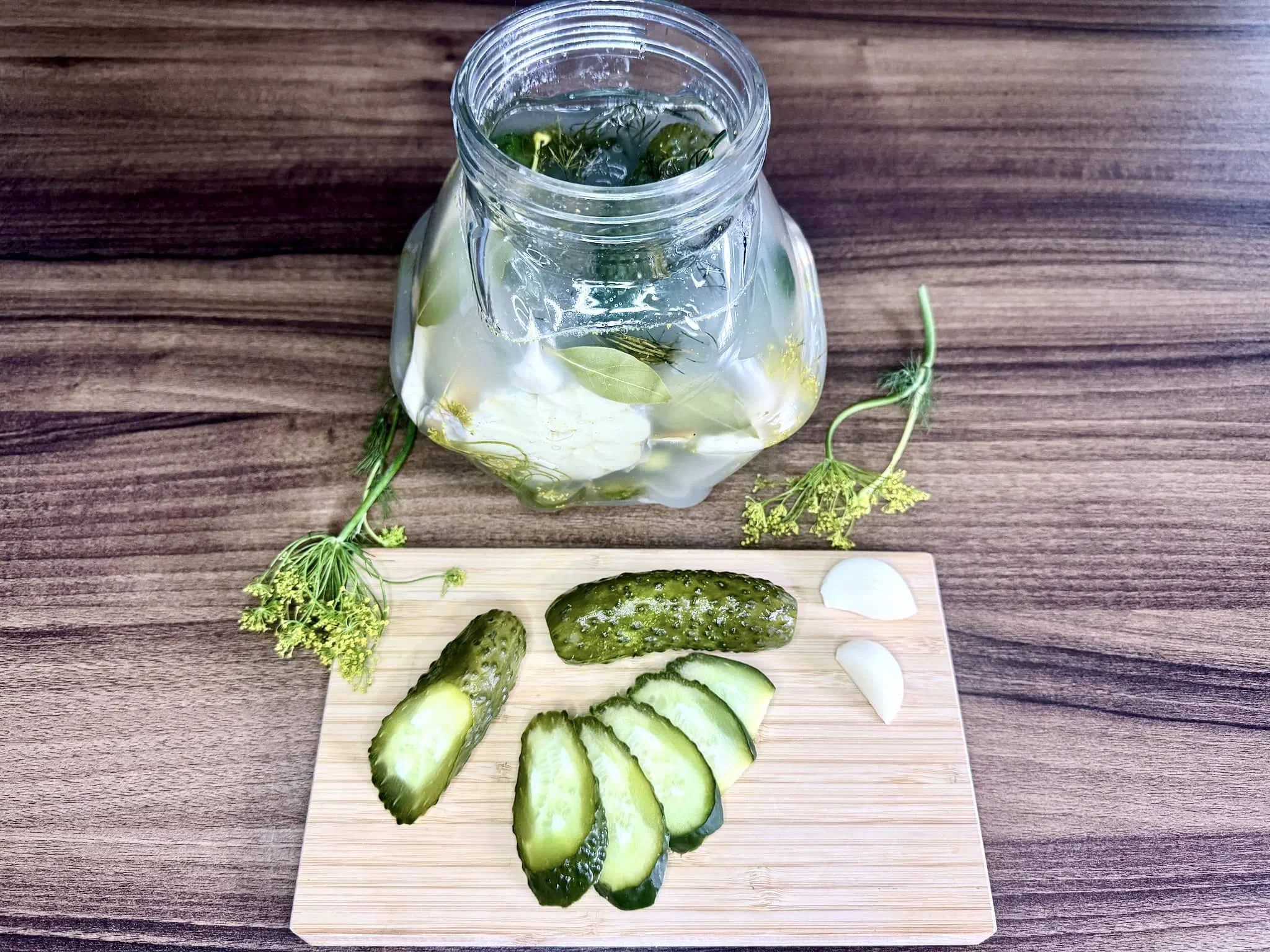
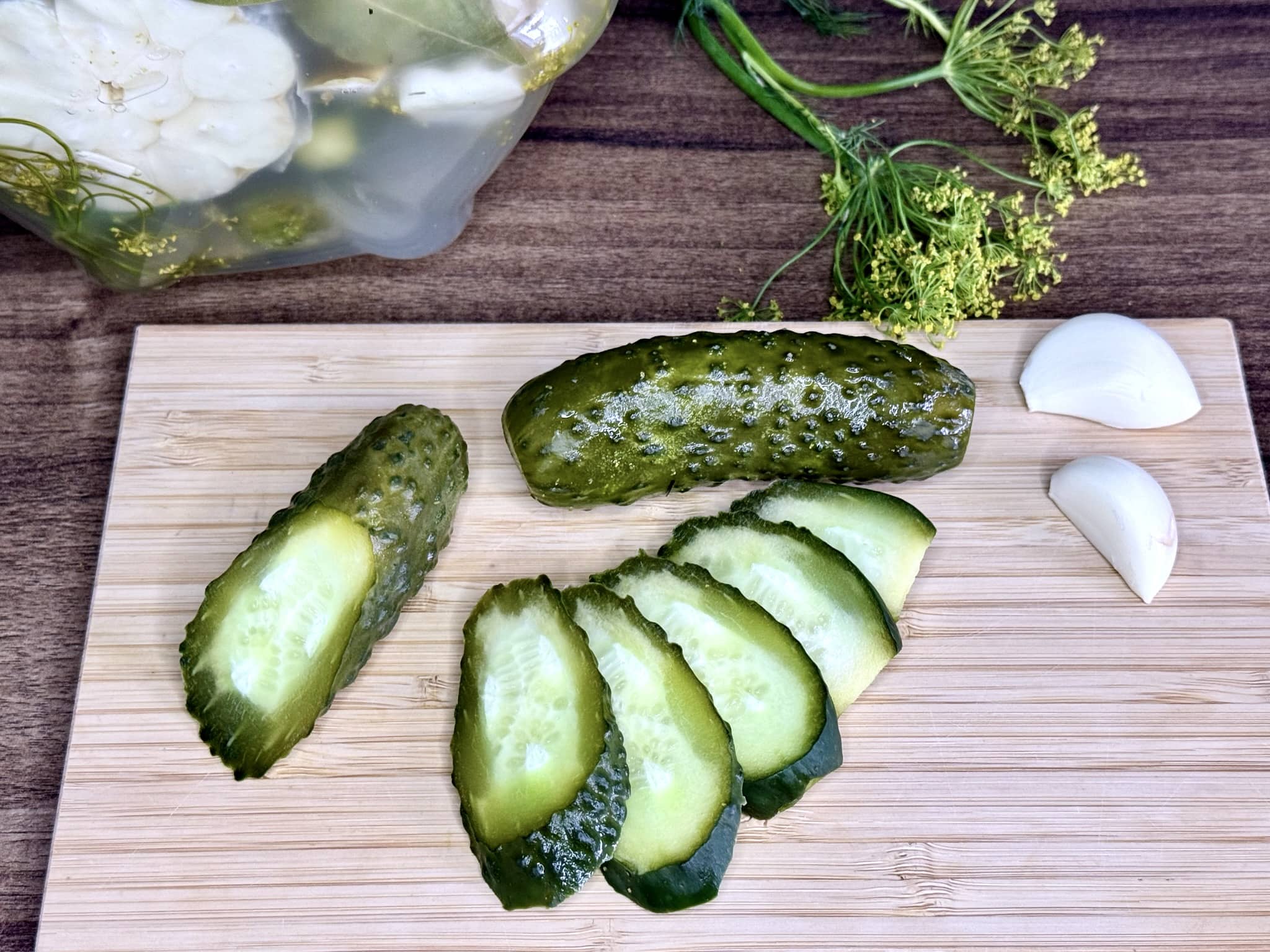
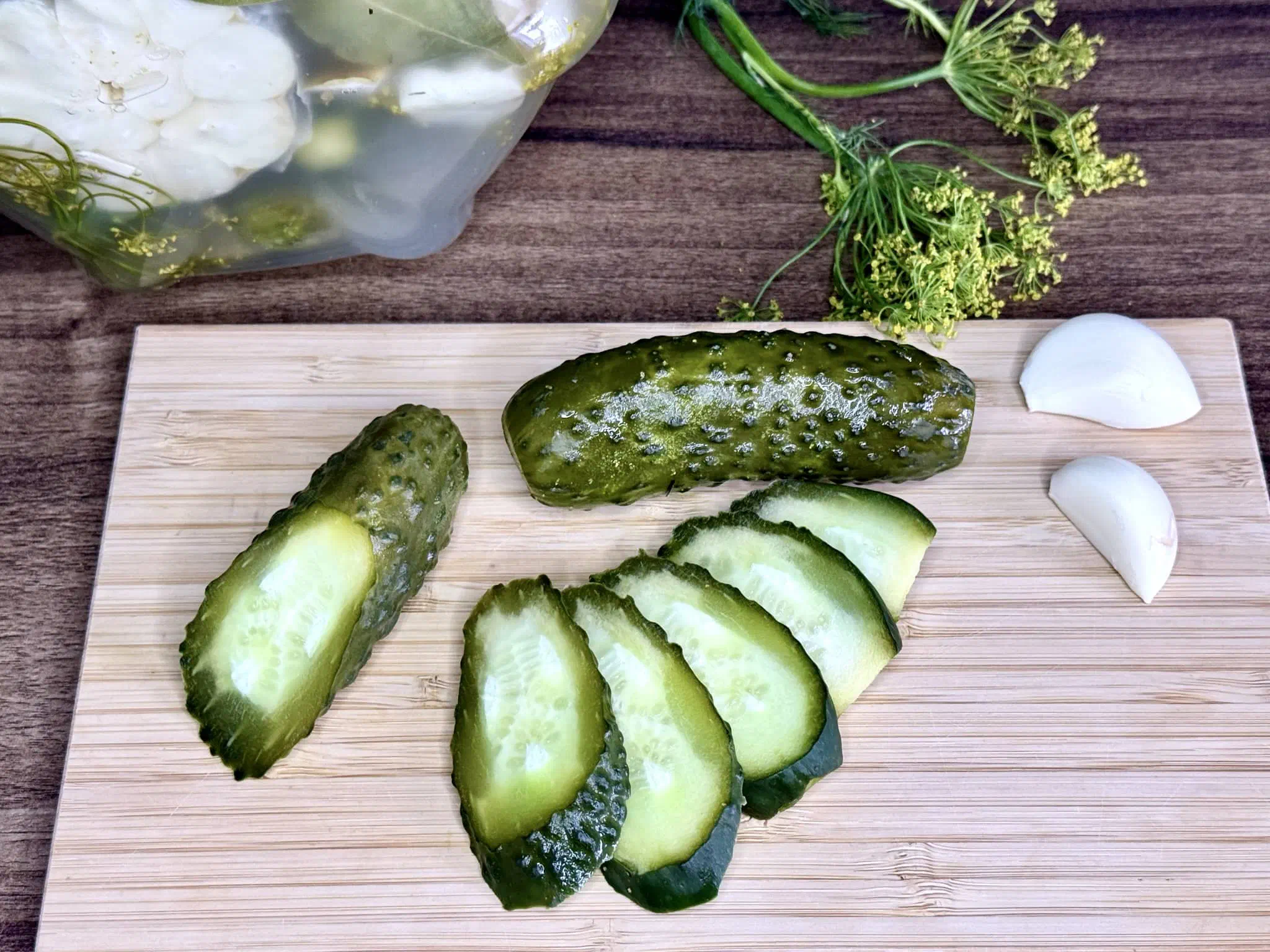
After 48 hours, the cucumbers will be lightly brined and crisp. You can take some out and taste them. If you love this mild flavour, transfer the jar to the fridge now to slow down fermentation and lock in the crunch. For a punchier, tangier taste, leave them at room temperature for one more day.
Day Three
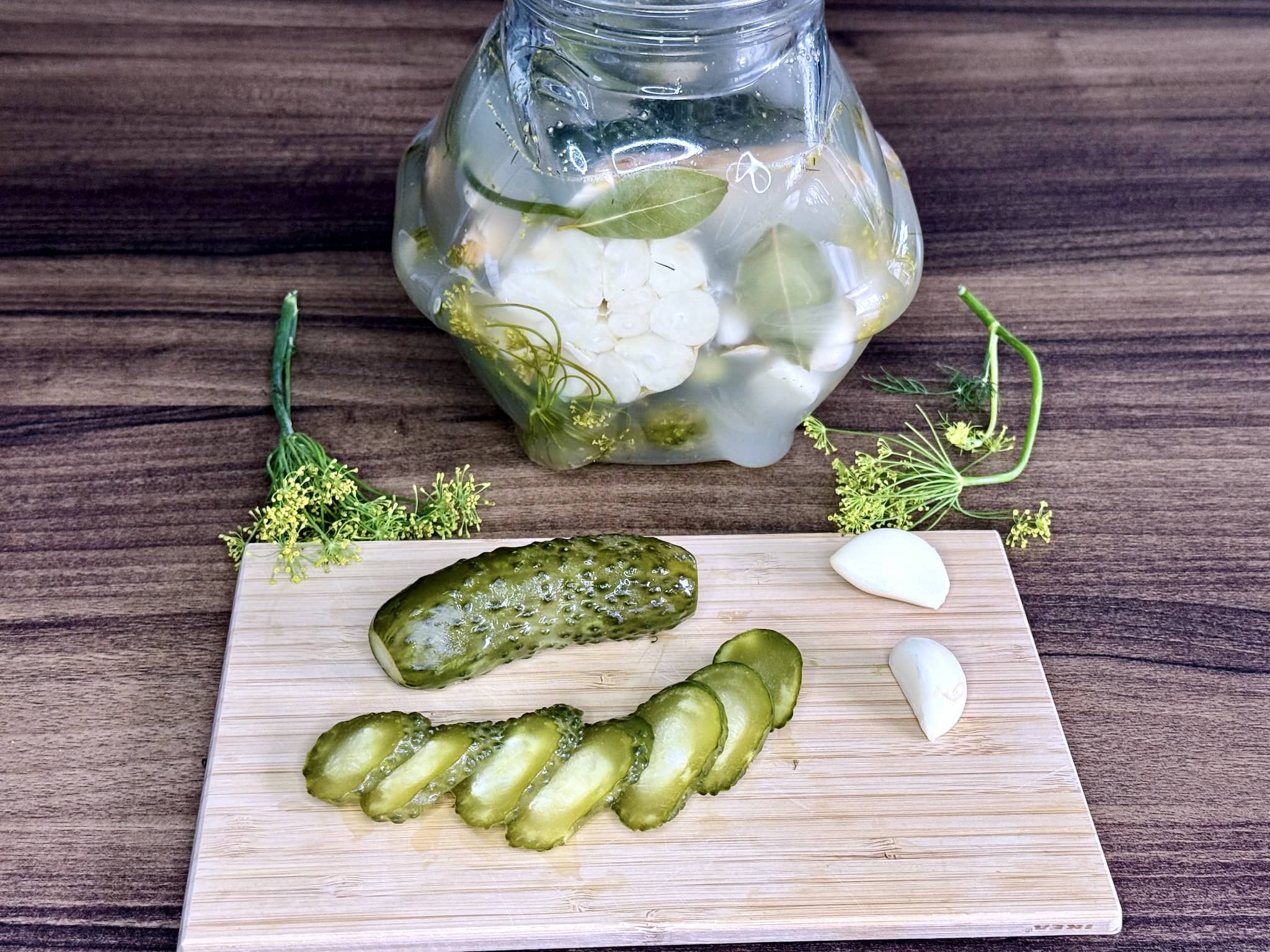
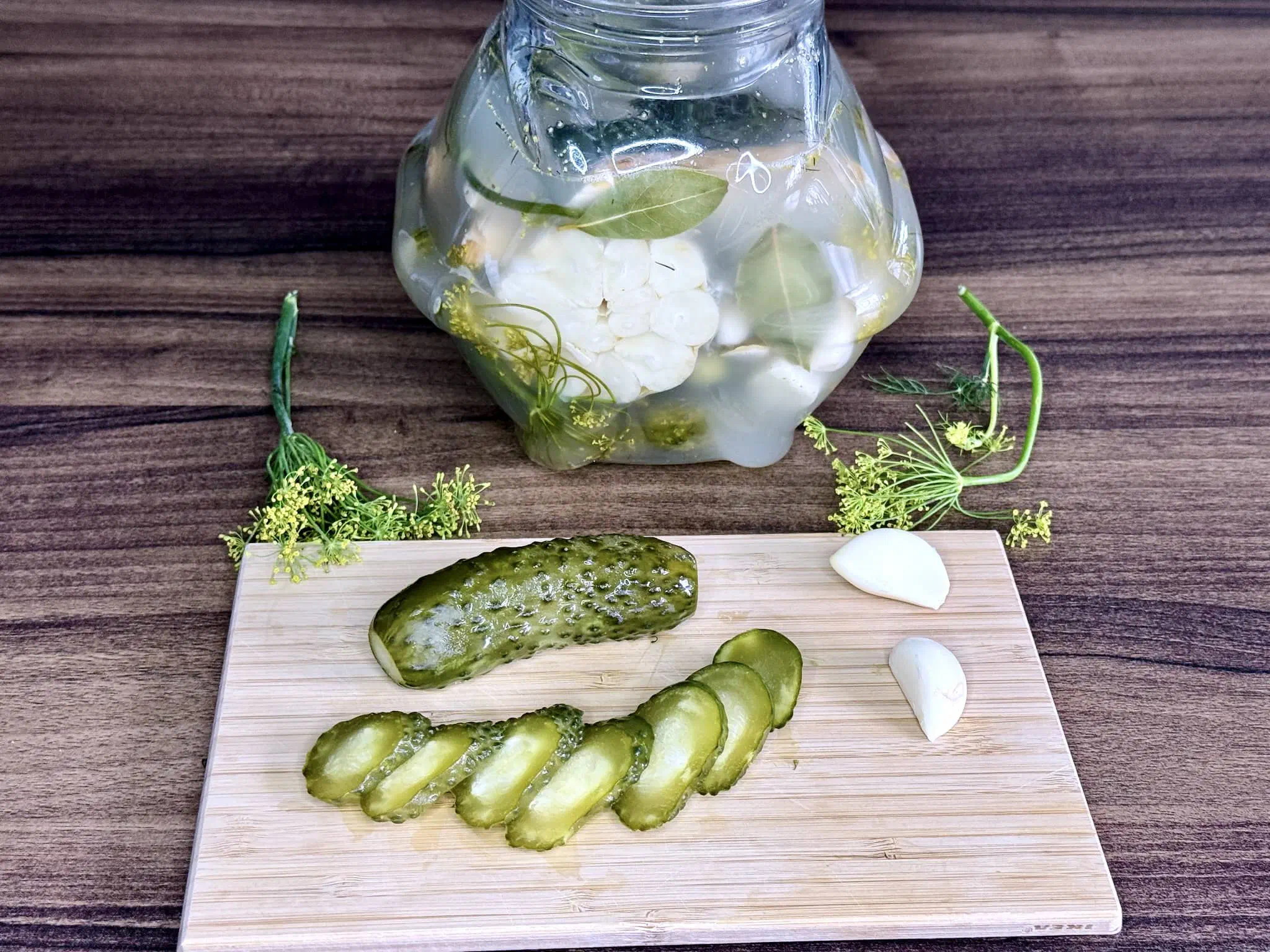
After 3 days at room temperature, your cucumbers will have developed that classic, punchy half-sour flavour. Move them to the fridge now to stop them from turning into fully sour pickles (ogórki kiszone). They are now ready to enjoy as a side dish or as a delicious snack.
Tips
The Ratio:
- Use 1 tablespoon per 1 litre of water (for 1.5 litres, use 1.5 tablespoons / ~30 g).
Why Salt Type Matters: Traditional Polish pickling relies on non-iodised, additive-free salt (sól kamienna niejodowana). Added iodine can inhibit the natural lactic acid bacteria (Lactobacillus) responsible for fermentation, while free-flowing anti-caking agents can make the brine cloudy and turn the cucumbers soft rather than crisp.
What to Avoid in the UK:
- Standard table salt (e.g. Saxa, supermarket free-flowing salt): While UK table salt is generally non-iodised, it almost always contains anti-caking agents (E535 / sodium hexacyanoferrate).
- Low-sodium salts (e.g. LoSalt): These contain potassium chloride and will not preserve the cucumbers properly
Best Salts to Use:
- Pure Sea Salt or Kosher Salt (e.g. Maldon, Cornish Sea Salt, or supermarket own-brand pure sea salt): Check the ingredients on the back – it should list 100% salt with no anti-caking additives.
- Polish Rock Salt (Sól kamienna do przetworów): Often found in the world food aisle of Tesco, Asda, Morrisons, or Sainsbury’s (brands like Kłodawa or O’Sole in 1 kg paper bags).
Probiotic Boost: Unlike vinegar-based pickles, traditional małosolne undergo natural lactic acid fermentation. By day 2 or 3, they are teeming with live, gut-friendly bacteria (Lactobacillus) that support healthy digestion.
Preserved Micronutrients: Because the cucumbers are brined without boiling, they retain high levels of Vitamin C and Vitamin K from the fresh cucumbers and flowering dill spears.